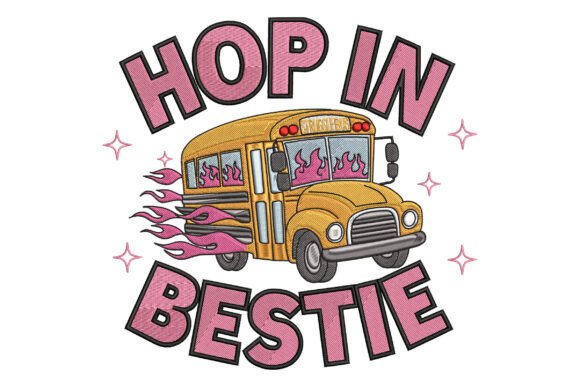
Hop in Bestie Struggle Bus
The Hop in Bestie Struggle Bus is a machine embroidery design that exudes playful charm and a touch of humor, making it a standout for craft fair products and handmade items. With its whimsical theme, this design has the potential to resonate with a wide range of customers, especially those looking for something light-hearted and expressive.
First Impressions and Visual Appeal
From the first glance, Hop in Bestie Struggle Bus feels like a fun, modern design that balances cute and quirky elements. It’s not overly complex, but it carries enough detail to catch the eye without overwhelming the viewer. The design seems ideal for adding a pop of personality to everyday items, making it perfect for tote bag design, apron embroidery, or tea towel embroidery.
This embroidery file would stand out in a booth display, especially when paired with neutral or pastel-colored fabrics. Its bold yet friendly vibe makes it an excellent choice for small shop product displays, where visual appeal can make or break a sale.
Performance on Different Products
On tote bags, Hop in Bestie Struggle Bus works well as a focal point, drawing attention with its unique concept. It also functions nicely as an embroidered patch, allowing for easy application on jackets, backpacks, or even as a standalone item for craft fairs.
For apron embroidery, the design adds a personal touch that can elevate the perceived value of a handmade product. On kitchen towels, it brings a sense of lightheartedness, making it a great fit for farmhouse or rustic-themed home decor.
When used on caps, the design may require some adjustment to ensure it sits well on curved surfaces. However, with proper hoop size and stabilizer use, it can look clean and professional. Similarly, on fabric pouches and pillow covers, the design adds a decorative element that enhances the overall aesthetic of the finished product.
Practical Selling and Production Considerations
As a machine embroidery design, Hop in Bestie Struggle Bus is likely easy to understand at a glance, which is essential for quick decision-making at a craft fair. It can work both as a small accent or a larger focal piece, depending on the project and customer preference.
Photographing this design for online listings should be straightforward, especially if the thread colors contrast well with the fabric. For Etsy sellers and digital embroidery file providers, the design could serve as a valuable addition to their collection of printable mockup assets.
In terms of batch production, the design appears to be repeatable, provided the stitch density is appropriate. It’s important to test the design on scrap fabric before committing to large runs, ensuring that it maintains clarity and vibrancy across different materials and sizes.
Careful-Use Notes
While Hop in Bestie Struggle Bus is generally user-friendly, there are a few considerations to keep in mind. Dense stitch areas might cause issues on thick fabric or textured towels, so careful selection of stabilizer is recommended. Tiny details and small lettering could become lost if the design is scaled down too much, so testing at various sizes is advised.
When working with dark fabric, the thread colors should be chosen carefully to ensure visibility. Additionally, curved cap surfaces may require extra attention to ensure the design lies flat and doesn’t pucker during stitching.
Impact on Customer Engagement and Brand Consistency
Hop in Bestie Struggle Bus has the potential to boost buyer engagement by offering something unique and relatable. Its humorous theme can spark conversation, making it a memorable addition to any handmade product line. This kind of design can also help reinforce brand consistency, especially for businesses that focus on fun, creative, or educational themes.
At a craft fair, the design can strengthen booth display strength by providing a visually appealing centerpiece. It encourages customers to stop and take a closer look, increasing the chances of a sale or inquiry.
Embroidery Designer Notes
Before finalizing any production run, it’s always wise to test the design on scrap fabric. This allows for adjustments in thread colors, spacing, and hoop size. Checking the stitch density ensures that the design will hold up over time and maintain its quality on various fabrics.
Using the right stabilizer is crucial, especially when working with delicate or stretchy materials. Creating at least one real mockup helps visualize how the design will appear on the intended product, whether it’s a tote bag design or a market bag.
Comparing fabric colors and confirming commercial licensing before selling finished products is also essential. As an embroidery business owner or boutique maker, ensuring that all legal and technical aspects are covered is key to maintaining a professional reputation.